Vowel length is written
The culture and heritage department’s Reo Tahiti resource distinguishes short vowels from long vowels marked with a macron. Ā, ē and ī are not decorative alternatives to a, e and i. The writing conveys information about sound duration. Systematically removing that mark to standardise a heading removes linguistic information.
Sources for this section: [1]
A mark that represents a consonant
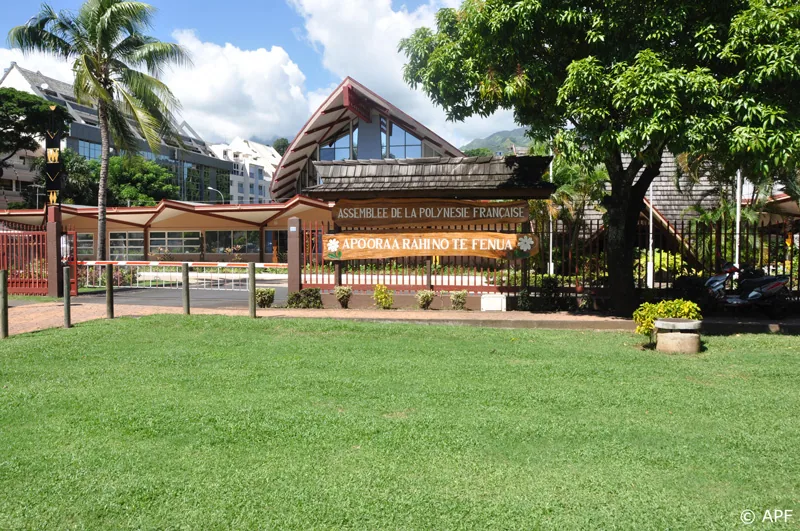
The same resource presents the glottal consonant, also called ‘eta. The mark represents an articulation rather than the ordinary function of a French apostrophe. The University of French Polynesia notes that vowel length and the position of the glottal stop can change word meanings. Visual similarity between spellings is therefore no guarantee that they are equivalent.

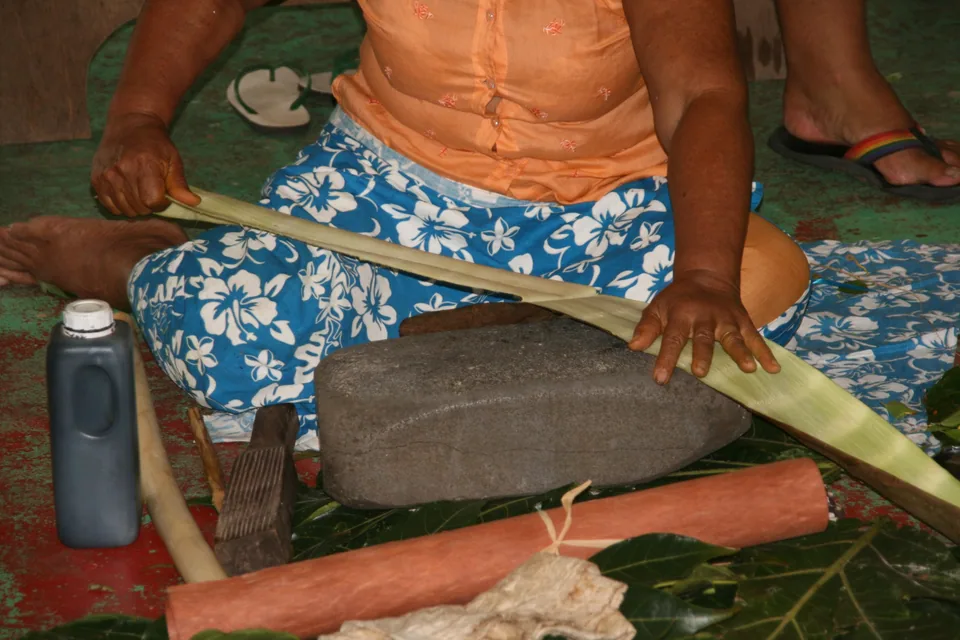
Jacques Iakopo PELLEAU · Source · CC BY-SA 4.0 · 2020-01-21 17:22:12 · Full photograph adapted for display.
Connecting writing and sound
UPF describes a project with the Tahitian Academy and its partners to associate recordings with dictionary entries. Its account suggests maro, parau and taua as starting points for comparing proposed forms. These are listening prompts, not translations reconstructed here. The project description documents a tool for transmission; it does not guarantee that every function is available today.
Sources for this section: [2]
Naming the language being discussed
These resources concern Tahitian. Other archipelagos have their own languages and writing practices: to understand a place name or expression, start by identifying the language concerned.
Read the signs, listen to the language
If you are unsure about a mark, check a language reference or a recording. Hearing the word can help you understand what the spelling indicates.
Sources and context
The sources are listed with their date or period.
- 200 mots — Langage, reo tahiti ↗
Direction de la culture et du patrimoine · 10 April 2024
- Prononciation des mots tahitiens en ligne ↗
Université de la Polynésie française · Presentation of an audio dictionary project, undated page
About this article
An introductory article, with no phonetic transcription created by Vagabond and no pronunciation lesson. No recording is reproduced and no speaker was interviewed.
Published by Tahiti Vagabond.
Our method →